
SPACEX CONDUCTS NINTH STARSHIP FLIGHT, BUT SPACECRAFT FAILS MIDWAY
SPACEX CONDUCTS NINTH STARSHIP FLIGHT

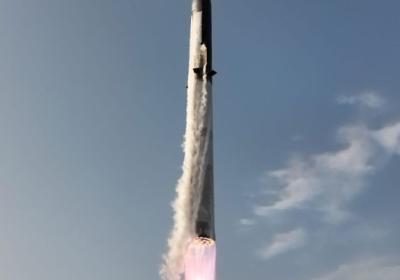
On May 27, 2025, SpaceX carried out its ninth integrated test flight of the Starship system from its launch site in Boca Chica, Texas. The mission initially appeared successful, achieving a clean liftoff and stage separation. However, it ultimately concluded with the destruction of both the Super Heavy booster and the Starship spacecraft during their respective descents.
Launch and Early Successes
The mission lifted off at 6:36 PM Central Daylight Time (23:36 UTC), using Super Heavy Booster 14 and Starship Ship 35. Notably, this marked the first time SpaceX reused a Super Heavy booster, a significant step toward the company’s goal of full rocket reusability. The spacecraft carried eight simulated Starlink payloads to test cargo deployment in space.
Following liftoff, the rocket successfully completed its ascent phase and stage separation. The booster and Starship then began their planned return trajectories—Super Heavy targeting a soft splashdown in the Gulf of Mexico and Starship aiming for reentry over the Indian Ocean.
Booster Disintegration
Approximately six minutes into flight, the Super Heavy booster initiated its return burn but quickly encountered issues. Telemetry was lost shortly after the burn began, and the booster was observed breaking apart mid-air. SpaceX confirmed that the booster was lost before completing its descent.
Starship Failure During Reentry
Although Starship reached near-orbital speeds and continued its journey for over 40 minutes, trouble struck during reentry. Around 47 minutes after launch, the spacecraft lost attitude control due to a suspected leak in one of the propellant tanks. As a result, it began tumbling uncontrollably and ultimately broke apart before it could complete its descent and splashdown in the Indian Ocean.
Adding to the mission’s setbacks, the spacecraft’s payload bay door failed to open, preventing the deployment of the simulated Starlink satellites it carried.
SpaceX Reaction and Forward Outlook
Despite the outcome, SpaceX labeled the mission a partial success, emphasizing the progress made and the data collected. CEO Elon Musk commented that the test flight provided valuable insights—particularly noting that the heat shield remained intact during ascent, an improvement from earlier tests. He stated that the failure during reentry was likely caused by pressure loss in one of the tanks and that corrective measures would be taken in future flights.
The Federal Aviation Administration has already approved dozens of Starship launches per year from the Texas site. SpaceX aims to ramp up its testing frequency to one flight every few weeks as it continues refining the Starship system for future deep-space missions, including potential crewed missions to the Moon and Mars.
Related News