
HEALTH SECTOR STRUGGLES: TENS OF THOUSANDS OF TRAINED WORKERS UNEMPLOYED
HEALTH SECTOR STRUGGLES

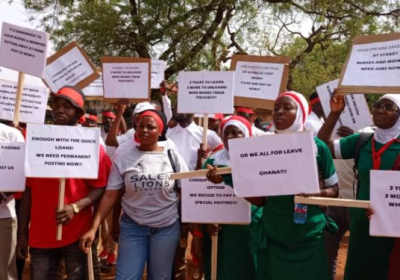
Ghana is facing a serious challenge in its healthcare sector, as nearly 100,000 trained health professionals—including nurses, midwives, and allied health workers—remain unemployed despite completing their training and obtaining licenses.
According to Health Minister Kwabena Mintah Akandoh, the country is dealing with a complex labor market crisis. Although there has been significant growth in the training of health workers—with the health workforce density increasing from 16.56 to 41.92 per 10,000 people between 2013 and 2022—many trained individuals have not been absorbed into the workforce. When unemployed health workers are considered, the density rises to 82.75 per 10,000, well above the global standard of 22.8.
The unemployment figure affects roughly 40% of the country’s trained health professionals. In addition, only 38% of those employed serve in rural areas, although over 40% of the population lives in these communities—highlighting a major imbalance in healthcare access.
Low wages are a key reason for dissatisfaction. The average monthly salary for a health worker is around GH₵2,813, while many believe at least GH₵3,000 is needed to meet basic living costs. Health professionals abroad, by comparison, earn significantly more—up to GH₵10,000 per month—leading many to consider leaving the country. Estimates suggest that two out of every three health workers are planning to migrate in search of better opportunities.
In response to pressure, the government announced in July 2024 that it would recruit over 15,000 nurses and midwives through the Ministry of Health's online portal. While welcomed, this measure addresses only a small portion of the unemployment backlog. Many applicants also reported challenges accessing the recruitment portal.
To address the wider issue, the Health Ministry has begun talks with the Ministry of Finance to accelerate the clearance process for over 75,000 graduate health professionals still waiting for placement.
Meanwhile, Deputy Health Minister-designate Alexander Akwasi Acquah has proposed exporting unemployed nurses to other countries in need, which could generate income for the state while easing local unemployment.
Past measures, such as reducing admissions to nursing colleges and scrapping the bonding policy for trainees, were aimed at controlling graduate numbers and easing pressure on the job market.
Despite these efforts, stakeholders believe long-term solutions are necessary. These include better working conditions, improved pay, rural incentives, and structured deployment plans to ensure Ghana’s growing pool of trained professionals is effectively utilized.
Related News